Not every challenge needs a better strategy. Sometimes it needs a different way of seeing. That is where Cornbread. began.
About Cornbread.
“I started Cornbread. because somewhere in the middle of all of it, in the borderlands as Gloria Anzaldúa would call them, I kept meeting the same type of person. Someone who had built something real and felt a gap between what they experienced every day and the life they imagined living. Someone who needed an honest conversation to help them start something new, look in a different direction, or finally align with what they already know to be true.”
— Dr. Ramon Amaro
For more than two decades, I've worked at the intersection of design, operations, leadership and transformation.
Whether redesigning organizations, leading complex operations or helping people make sense of periods of change, I kept noticing the same thing.
The visible problem was rarely the real problem.
The patterns beneath it were.
I’ve been there, and I’ve been the person lost in the confusion too.
Cornbread is a reminder that the things which sustain us are often the simplest.
A place at the table.
A conversation.
A home that feels like home.
Work that reflects what matters.
A life that fits.
Why Cornbread.?
“The Recipe I Carried With Me.”
-
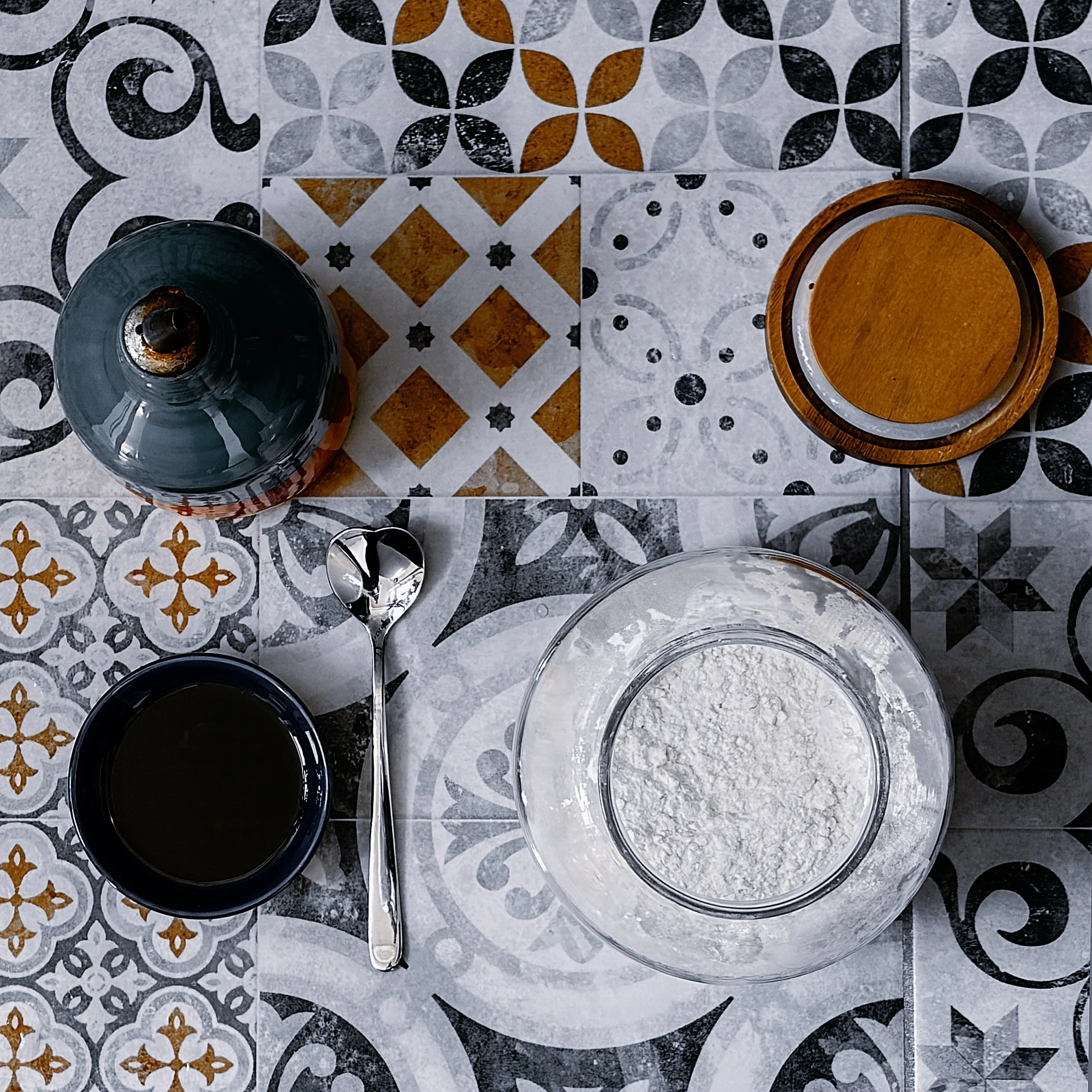
Cornmeal. Milk. Flour.
The recipe then unfolds into individual taste and style.
Not one. Many. My mother made cornbread one way. My sister made it another. My grandmother had her own version — a little sweeter, a little thicker, cooked in a cast iron she had owned for thirty years. None of them wrote the recipe down. They felt, they observed. They relied on their senses to carry the personal flavor profile and on their connection to trust in capability and technique. The same tools somehow made the recipe unique.
I made each one slightly wrong at first — too dense, too dry, missing something I could not quite name. But with each attempt I got closer. Not just to the recipe, but to something in myself. What I valued. What I was made of. What kind of life I was actually trying to build, here, now, far from home.
Finding the perfect cornbread recipe was a practice in home, imagination and creativity using simple ingredients combined with a desire to create something special that can be passed down for generations.
But Cornbread isn’t about food.
It’s about depth through simplicity and craft, and the wonder that emerges — through what we see, feel, think, touch, wear and smell — on the relentless search for joy and happiness in our lives. It's a recipe I’ve used for many years to remind me that home is where I am, right here, right now. And that sometimes all it takes is a simple reset to shift my focus towards what matters most, where I can use the ingredients of my life to create new recipes for my personal, home, and work life transitions.
It starts with a daily question: what do I carry forward, what do I create around me, and what does it mean to live — really live — with purpose and intention, wherever I am?
These questions became Cornbread.
-
I grew up in Detroit drawing cars.
Not trees. Not dogs. Cars. My home town Detroit has always been a city that makes things with its hands — where the act of making something real is how you understand the world. My parents came of age in a neighborhood alive with music, in a city where the sound coming out of small studios and big factories changed what the world listened to and how the world moved its soulful hips and curvy roads.
My aunt worked at Volkswagen and listened patiently as I talked endlessly about design as a child. She would promise to take my crayon drawings to the engineers. One day they'll build your car, she would say. Every time I saw her I asked: is today the day? She'd smile. Soon.
Eventually I studied mechanical engineering at the University of Michigan and joined General Motors as a quality design engineer. But it was my first visit to the GM Design Studio in Michigan that changed everything. Walking through those doors I encountered something I had no language for yet — a car was not simply a machine. It was a decision about beauty, taste, and form combined with the hard realities of textiles and steel. It was the perfect balance, sparked by a choreography of moving objects, people, and electricity in the name of bringing craft and creativity to life and elevating experience. I understood that what is made with intention can never stay still — and what is cultivated within radiates outward, changing the quality of ourselves and the world around us.
-
That realisation sent me to New York.
[cue Alicia Keys]
“Ooh, New York. Ooh, New York
Grew up in a town that is famous as a place of movie scenes
Noise is always loud, there are sirens all around and the streets are mean…”
Alicia Keys could never! Or could she?
I arrived as an independent writer in the early days of sharing content directly with online readers — before platforms, before algorithms, before anyone had a word for what we were doing. I wrote about queer life.
Information, travel, health, culture, the full texture of a life being lived openly and honestly in the big city. I walked the streets of Harlem collecting everyday people's stories to share with the world. Looking back, you might call it early influencing. I would call it what it always was — the belief that ordinary lives carry extraordinary stories, and that sharing them is an act of courage and the audacity to bear witness.
New York taught me that beauty lives closest to the ground. That wonder is not reserved for galleries, institutions, or academies. That joy, properly nourished and pursued, is available to all of us.
Then that search sent me further across the same ocean my ancestors once carried me in hopes and dreams.
-
To Vienna first — to connect with artists, writers, thinkers — where the same questions I had been asking about machines and people were being asked about painting, architecture, philosophy, objects, the body, the city, sound. Then to London, where I spent the better part of my European journey teaching and learning — philosophy at Goldsmiths, art history at UCL, the visual cultures of a world far wider than the one I had been trained to see. I moved through those years with the same curiosity my mother carried. She loved literature, she loved film, she loved a good story and everything she had ever learned — and she shared all of it freely. I suppose that is why I eventually became a philosopher and a teacher of the history of art. The questions kept leading somewhere new.
-
From London to Rotterdam, where I led research into digital culture and the hidden lives of objects and what it means to live in the process of becoming something or someone you’ve always wanted to be. To be the protagonist of your own story, walking hand in hand with lemons that you are determined to turn into lemonade.
Three ingredients: Water. Lemon. Sugar.
Then to Amsterdam.
Along the way I learned, slowly and then all at once, that whether it was engineering a new motor, designing a new system, dreaming a first chapter, walking the streets of Harlem with a vintage camera and notebook, cooking, or delicately crafting a dream living space hand by hand — life is connected to the people, objects, and experiences we love. That give us meaning. Things that we want to take with us. Things that we want to leave behind. And that connection — with ourselves and our environment — is handcrafted. One fine material at a time. One step. Your own recipe.
-
Then somewhere in my kitchen in Amsterdam, a long way from home, a long way from and back to myself, I found my own recipe. My own cornbread. My family's cornbread.
I hope that Cornbread. can be this space for you. To use the ingredients you have to find the layers underneath and create an atmosphere that brings you closer to home, no matter where you are.
Over time this practice became a methodology I call Atmospheric. Direction
Atmospheric. Direction
Atmospheric. Direction by Cornbread. helps you notice the patterns in your atmosphere so you can start to see things clearly and find a new direction.
Because when you can see what has been shaping your life all along, the next direction doesn't need to be invented.
It begins to reveal itself.
How It Works.
-
Before booking, you'll complete a short three-part questionnaire. This isn't an application or a test. It's simply the beginning of the conversation, helping us notice the patterns, conditions and questions already shaping your experience. There is nothing to prepare. Just arrive as you are
-
During our conversations we'll explore the atmosphere of your life—your home, your work, your rhythms, your habits and your relationships—looking for the hidden patterns that quietly shape how you experience each day.
This isn't about fixing problems. It's about learning to see them differently, giving you the clarity to feel more like yourself.
-
Within 48 hours, you'll receive your personal Atmospheric. Direction Map together with a private voice note reflecting on the patterns we uncovered, the conditions influencing them, and the direction beginning to emerge.
From there, you'll have a clearer understanding of where you are, what has been shaping your experience, and what comes next.
-
Online or in person by arrangement.
We don't arrive with answers. Together we explore solutions in the hidden atmosphere of your life to make sense of what has been quietly shaping your experience. From there, we create the conditions for meaningful change.
What I Bring.
My perspective has been shaped by a career spanning engineering, philosophy, design, executive leadership and organizational transformation.
Over the past three decades, I've worked across higher education, government, cultural institutions, foundations and global organizations, leading complex change, building teams, redesigning systems and advising on strategy, technology and culture.
I hold a PhD in the Philosophy from Goldsmiths, University of London, a Sociology Masters from University of Essex, and a Mechanical Engineering degree from University of Michigan. I’ve worked at General Motors, the American Society for Mechanical Engineers, and as a writer for About.com (then owed by The New York Times). I've taught at Goldsmiths and UCL, led Digital Culture research at the Nieuwe Instituut in Rotterdam, and served as Creative Director and Vice Chairman of the Executive Board at Design Academy Eindhoven.
My work has included advising governments and foundations on artificial intelligence, digital culture and organizational intelligence, and in 2022 Sternberg Press published my book, The Black Technical Object: On Machine Learning and the Aspiration of Black Being.
Cornbread. is where those experiences come together as a way seeing and being in the world.
Cornbread. is built on the belief that clarity is not something we find alone.
If something in your life or work no longer fits, I'd be glad to explore it with you.
There’s Room at The Table.
The Table is a gathering place for people who are noticing the patterns shaping their lives, their work, and the world around them.
It’s a place for thoughtful conversations, shared experiences, and ideas that help us see more clearly.